2026-07 Archive

When I first walked into a monastery workshop in the Kathmandu Valley, I watched an elderly Newari artist hold a single-hair brush steady for three hours. His hand never trembled. The mandala he was painting—a shimmering representation of the Chakras
- 7-10
- 209
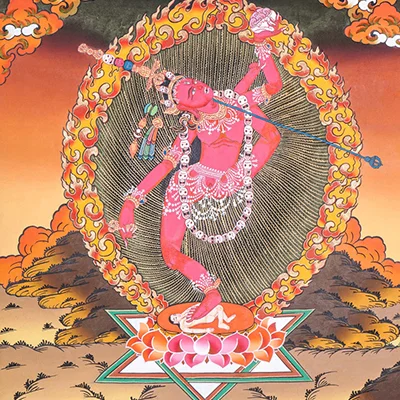
A Living Tradition in a Digital Age For centuries, the creation of Tibetan Thangka has been a sacred act—a meditative practice passed down through generations of monastic artists who dedicated their lives to preserving the visual language of Buddhis
- 7-9
- 182
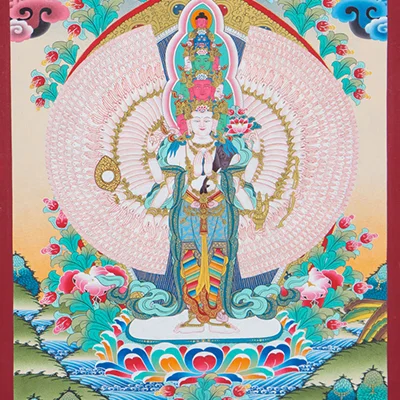
In the hushed, butter-lamp-lit interiors of Kathmandu’s ancient monasteries, a story unfolds in pigment and gold. It is a story of gods and demons, of mandalas and cosmic diagrams, but also—less obviously—a story of caravans, of yak trains laden with
- 7-9
- 225
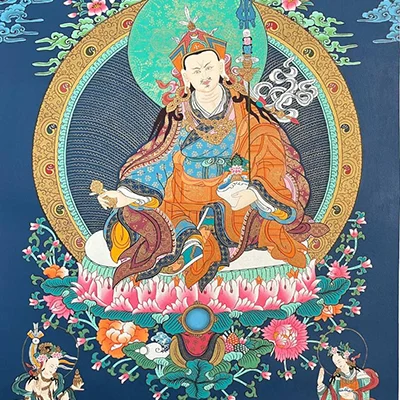
Tibetan thangkas are far more than exquisite paintings on cloth. They are intricate visual scriptures, meditational tools, and repositories of esoteric knowledge that have been passed down through generations of Himalayan masters. At first glance, a
- 7-9
- 193
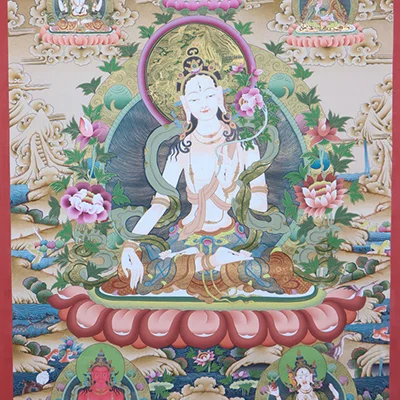
Tibetan Thangka painting is not merely an art form—it is a visual scripture, a meditative tool, and a living tradition that has evolved over more than a millennium. For those who first encounter a Thangka, the immediate impression is one of overwhelm
- 7-8
- 163
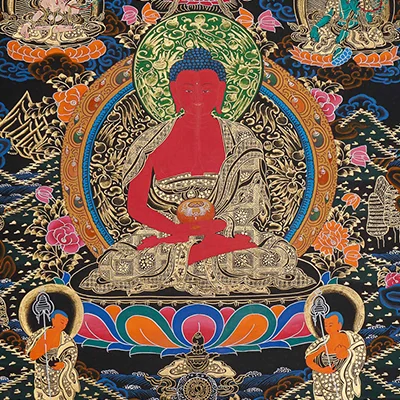
When we think of Tibetan thangka today, we often imagine a solitary artist hunched over a silk canvas, meticulously applying ground mineral pigments with a single-hair brush. It’s a romantic image—the lone visionary channeling divine energy into port
- 7-8
- 220
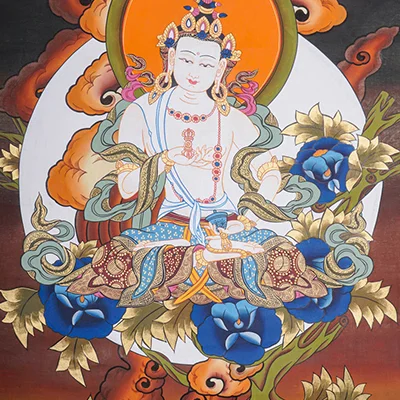
Tibetan Thangka painting is far more than religious art—it is a coded visual scripture, a meditative map, and a repository of esoteric knowledge passed down through centuries. Behind every brushstroke lies a universe of meaning, and behind every mast
- 7-8
- 257
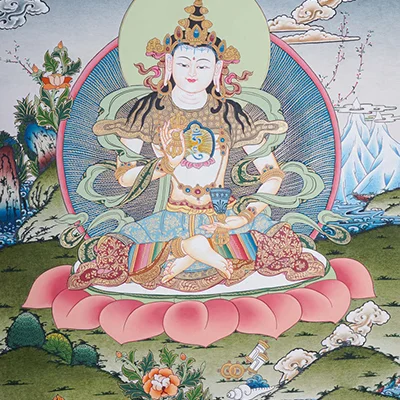
In the hushed glow of a Himalayan monastery, a painted deity stares back at you. Its eyes are not merely decorative—they are portals. For centuries, Tibetan thangka painters have embedded layers of coded meaning into the eyes and facial expressions o
- 7-7
- 256
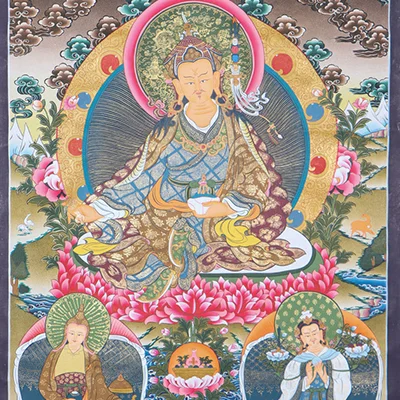
Tibetan thangka painting is not merely an art form—it is a visual scripture, a meditative device, and a cosmological map rolled into one. Among its most complex and spiritually charged subjects is the mandala, a geometric representation of the univer
- 7-7
- 221
When I first laid eyes on a Tibetan thangka mandala in a small monastery outside Kathmandu, I didn’t know what I was looking at. The painting was dense, intricate, and almost overwhelming—a riot of colors, symbols, and figures arranged in a perfect g
- 7-7
- 209
About Us

- Ethan Walker
- Welcome to my blog!
Hot Blog
- Exploring Sacred Weapons in Thangka Iconography
- The Role of Eyes and Expression in Thangka Figures
- How Thangka Reflects Buddhist Ritual Timelines
- Decoding Secret Mandala Borders and Outer Circles
- Depicting Deity Hierarchies in Mandala Centers
- Introduction to Spiritual Tourism and Thangka Workshops in Nepal
- How International Audiences Interpret Nepalese Symbolism
- How Virtual Exhibitions Promote Nepalese Art Globally
- Understanding the Role of Enlightened Teachers in Art
- How Exhibitions Reflect Spiritual and Artistic Significance
Latest Blog
- The Influence of Hindu and Buddhist Cosmology
- How Restoration Choices Affect Value
- Orange Ritual Items and Spiritual Power
- How Digital Thangkas Are Used in Meditation Apps
- Artisans Behind Nepal and Tibetan Thangka Production
- Sacred Knives for Cutting Borders and Cloth
- Modern Adaptations of Deities in Interactive Digital Art
- How Thangka Art Facilitates Cross-Border Artistic Collaboration
- How Thangka Art Inspires International Collaborative Projects
- Depicting Deity Hierarchies and Cosmic Order
- Sacred Geometry in Major Artistic Schools
- The Iconography of Enlightened Beings in Thangka Art
- Top Museums Integrating Thangka into Diplomatic Programs
- Depicting Ritual Objects within Mandala Designs
- How Hidden Symbols Represent Protection and Power
- How Patronage Shaped the Work of Famous Thangka Masters
- Purple Symbolism in Mystical Knowledge
- Emerging Practices in Global Thangka Conservation
- Blue Water Symbols and Spiritual Purity
- How Spiritual Tourism Promotes Authentic Cultural Experiences