Deities and Iconography Explained
Delve into the intricate symbolism of Thangka paintings, where every deity, mudra, and color holds profound spiritual significance. This comprehensive guide unravels the religious and philosophical meanings behind Buddhist and Hindu figures, helping art enthusiasts and spiritual seekers alike interpret the sacred narratives, divine attributes
Deities and Iconography Explained
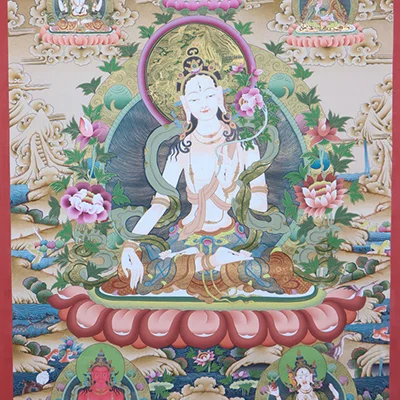
When the Sacred Becomes a Map: Depicting Deity Hierarchies and Cosmic Order in Tibetan Thangka There is a moment, standing before a large Tibetan thangka, when the eye stops behaving like an eye and starts behaving like a pilgrim. You are not simply
- 9-26
- 31
When the Divine Looks Back: Reading Enlightenment in Tibetan Thangka Art There is a particular moment that happens when you stand in front of a large thangka for the first time—not a photograph of one, not a reproduction in an art history textbook,
- 9-26
- 41
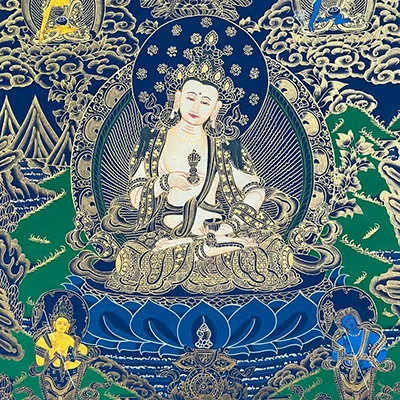
When a Gaze Becomes a Scripture Walk into any Tibetan monastery or thangka gallery, and you will feel it before you understand it. A pair of eyes—almond-shaped, impossibly serene, tilted at an angle that seems to defy earthly geometry—stares back at
- 9-3
- 109
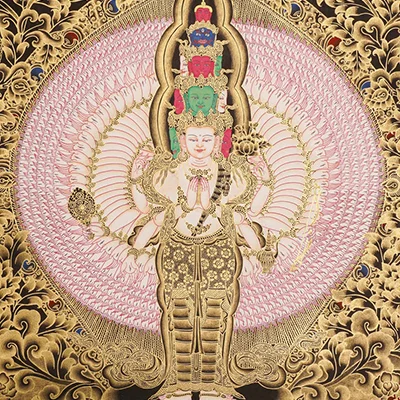
When the Sword Is Not a Sword: Reading Violence as Compassion in Tibetan Sacred Art Walk into any serious collection of Tibetan thangka paintings—whether in a monastery archive in Lhasa, a museum vault in New York, or a curated digital gallery—and y
- 8-31
- 128
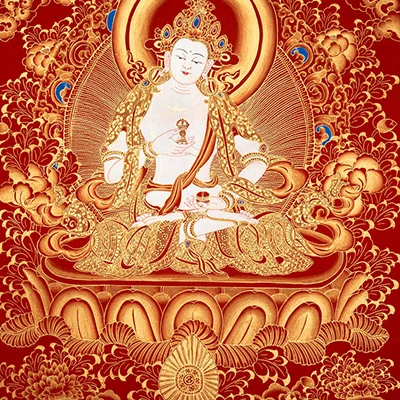
When most Westerners hear the name Hanuman, their minds jump to the Ramayana, to burning Lanka, or to the epic leap across the ocean to find Sita. But what if I told you that the monkey god—this quintessentially Hindu figure—has a quiet, profound, an
- 8-17
- 138
Tibetan Thangka, the intricate scroll painting tradition of Himalayan Buddhism, is far more than religious iconography. It is a visual language of enlightenment, a map of consciousness, and perhaps most profoundly, a living meditation on the union of
- 7-22
- 205
The first time I stood before a 15th-century Tibetan thangka in a dimly lit museum gallery, I felt something shift. It wasn’t just the gold leaf catching light or the impossibly precise brushstrokes—it was the sense that the figure on the silk was lo
- 7-16
- 214
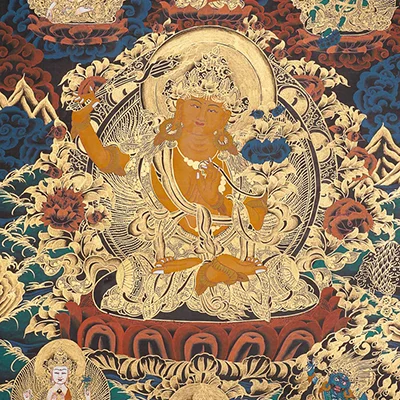
Tibetan Thangka painting is far more than a decorative art form. It is a visual scripture, a meditative tool, and a profound map of the enlightened mind. For centuries, these intricate scroll paintings have served as windows into the Buddhist cosmos,
- 7-13
- 267
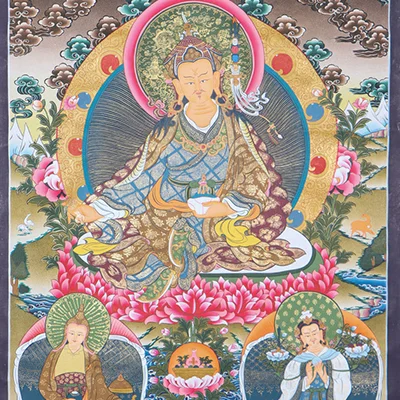
In the high-altitude silence of the Tibetan Plateau, where the air thins and the sky deepens into a shade of blue that feels almost otherworldly, a tradition of sacred painting has flourished for over a thousand years. Tibetan thangkas—those intricat
- 7-11
- 292
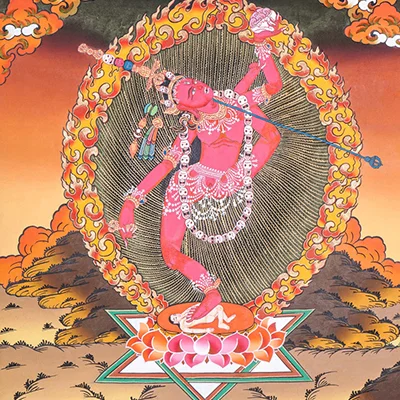
Art has always been a vessel for the ineffable, but perhaps nowhere is this more profoundly realized than in the sacred scroll paintings of Tibetan Buddhism—the thangka. For centuries, these intricate, meticulously crafted works have served not merel
- 7-4
- 175
About Us

- Ethan Walker
- Welcome to my blog!
Hot Blog
- Exploring Sacred Weapons in Thangka Iconography
- The Role of Eyes and Expression in Thangka Figures
- How Thangka Reflects Buddhist Ritual Timelines
- Decoding Secret Mandala Borders and Outer Circles
- Depicting Deity Hierarchies in Mandala Centers
- Introduction to Spiritual Tourism and Thangka Workshops in Nepal
- How International Audiences Interpret Nepalese Symbolism
- How Virtual Exhibitions Promote Nepalese Art Globally
- Understanding the Role of Enlightened Teachers in Art
- How Exhibitions Reflect Spiritual and Artistic Significance
Latest Blog
- The Influence of Hindu and Buddhist Cosmology
- How Restoration Choices Affect Value
- Orange Ritual Items and Spiritual Power
- How Digital Thangkas Are Used in Meditation Apps
- Artisans Behind Nepal and Tibetan Thangka Production
- Sacred Knives for Cutting Borders and Cloth
- Modern Adaptations of Deities in Interactive Digital Art
- How Thangka Art Facilitates Cross-Border Artistic Collaboration
- How Thangka Art Inspires International Collaborative Projects
- Depicting Deity Hierarchies and Cosmic Order
- Sacred Geometry in Major Artistic Schools
- The Iconography of Enlightened Beings in Thangka Art
- Top Museums Integrating Thangka into Diplomatic Programs
- Depicting Ritual Objects within Mandala Designs
- How Hidden Symbols Represent Protection and Power
- How Patronage Shaped the Work of Famous Thangka Masters
- Purple Symbolism in Mystical Knowledge
- Emerging Practices in Global Thangka Conservation
- Blue Water Symbols and Spiritual Purity
- How Spiritual Tourism Promotes Authentic Cultural Experiences